
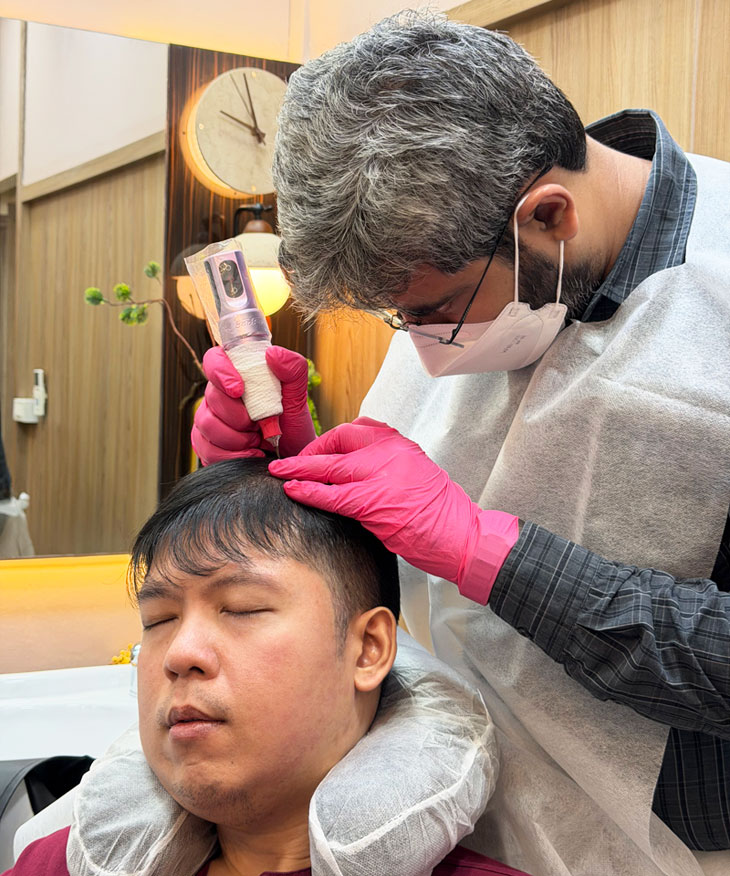
Scalp micropigmentation is a specialized medical tattooing technique that deposits micro-dots of pigment into the scalp, mimicking the appearance of hair follicles or stubble. This creates an illusion of denser hair and helps disguise areas of thinning or alopecia, making it ideal for those seeking a fuller hair look without surgery. At DermaStation Skin Clinic, Dr. Sumit Sethi brings international certification and advanced training to every SMP session, ensuring safety and natural outcomes.
Who Can Benefit from Scalp Micropigmentation?
SMP is suitable for:
- Men and women with pattern hair loss who are not candidates for (or do not desire) hair transplants.
- Patients with scarring alopecia (e.g., lichen planopilaris) or visible scalp scars from injury or previous surgeries.
- Those with insufficient donor hair for transplantation.
- Individuals wanting to camouflage thinning areas or improve the aesthetics post hair transplant.
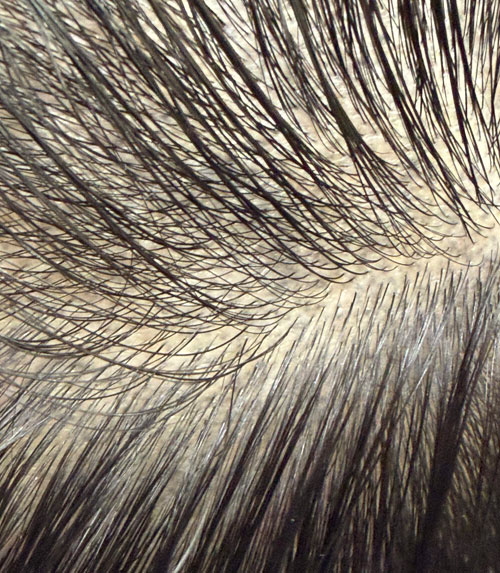
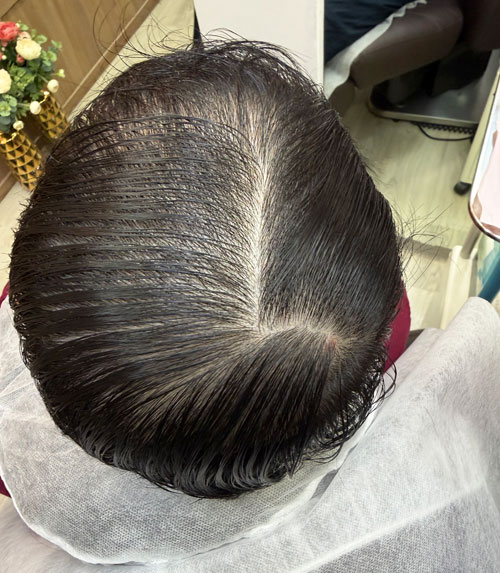
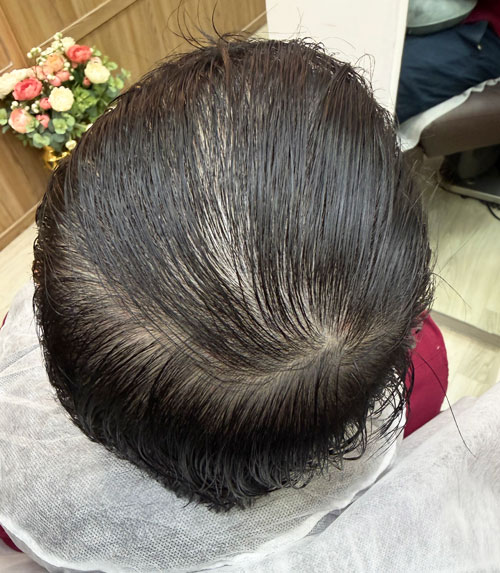
SMP is not just for “shaved look” aesthetics—it’s also used for density enhancement when some natural hair remains. However, it does not add volume; it camouflages scalp visibility.
SMP vs Hair Transplant: Key Differences
| Criteria | Scalp Micropigmentation | Hair Transplant |
|---|---|---|
| Method | Pigment dots simulate follicles | Follicular Unit Extraction/Transplant |
| Invasiveness | Non-surgical | Surgical |
| Recovery Time | Minimal (few days) | Longer (may involve downtime, suture removal, etc.) |
| Longevity | Semi-permanent (1-4 years, touch-ups may be needed) | Permanent (with transplanted hairs) |
| For Scarred Scalp | Effective in camouflaging scars | May not be possible in scarred, poorly vascularized tissue |
| Side Effects | Rare, usually minor | Infection, graft failure, scarring possible |
| Cost | Lower, especially for larger areas | Higher, based on number of grafts |
| Maintenance | Color refresh every 1–4 years | Continuous with time (as native hair loss progresses) |
SMP is especially recommended when hair density in the affected area is above a certain threshold—104.6 hairs/cm² and above—while transplantation is ideal for sparse or advanced baldness.
The Scalp Micropigmentation Procedure: Step-by-Step
- Consultation and Planning: Assessment of scalp type, color match, and desired density.
- Preparation: The scalp is cleansed and numbed with a topical anesthetic cream.
- Pigment Selection: High-grade pigments matched to natural hair color.
- Application: Disposable, sterile microneedles deposit pigment into the upper dermis, forming tiny, natural-looking dots.
- Session Duration: Each session lasts 2–4 hours. Typically, three sessions are required one week apart, with a final touch-up at one month.
- Healing: Mild discomfort, redness, or swelling may last a day or two. Full healing is expected in 5–7 days.
Side Effects and Safety Considerations
- Common, Mild Issues: Temporary redness, swelling, mild discomfort.
- Rare Complications: Allergic reaction to pigment, minor skin irritation, pigment “bleed” (usually resolves with proper technique).
- Infection Risk: Prevented with strict sterile technique and aftercare.
- Pigment Fading or Color Change: Touch-ups may be necessary every few years.
- Koebnerization: In rare cases, inflammatory skin conditions can flare at sites of trauma, so proper assessment is vital before SMP.
With a certified dermatologist like Dr. Sumit Sethi and high-grade medical inks, adverse events are minimized.
Dos, Don’ts, and Pre/Post Care for Scalp Micropigmentation
Before the Procedure
- Avoid blood thinners/NSAIDs one week prior (unless medically necessary).
- Do not use hair dyes or harsh chemicals.
- Inform your provider about any allergies or active scalp conditions.
After the Procedure
- Keep scalp clean and dry for the first 24 hours.
- Avoid sun exposure, swimming pools, or saunas for 2–4 weeks.
- Apply topical antibiotic as advised to prevent infection.
- Do not pick at scabs or scratch the area.
- Resume normal hair washing after 2–3 days unless told otherwise.
Frequently Asked Questions
Is it painful?
Most people tolerate SMP well, with topical anesthetic making the process comfortable.
How long does the result last?
Results are semi-permanent—typically 1–4 years before touch-up is needed, depending on skin type, sun exposure, and lifestyle.
Will it look fake?
If done by a trained medical professional with artistic skill, results appear natural and seamless.
Is SMP safe for everyone?
Not suitable for those with uncontrolled scalp disease, active infection, or metal allergies. Always let your dermatologist assess candidacy.
How soon can I return to work?
Usually the next day, as there is little social downtime.
Why Choose Dr. Sumit Sethi and DermaStation Skin Clinic?
Proper training and an artistic eye are critical for safe, natural results. Dr. Sumit Sethi, with international accreditation in scalp micropigmentation, combines dermatological expertise with a personal commitment to each patient’s confidence and comfort. A meticulously clean environment, advanced equipment, and evidence-based practices are standard for every client.
Final Thoughts
Scalp micropigmentation is transforming lives by restoring confidence and reducing the daily burden of hair loss. At DermaStation, the focus is on safety, aesthetics, and genuine care. Reach out to discuss your unique goals—personalized consultations are available.
SEO Keywords to Include:
- Scalp micropigmentation India
- SMP clinic Janakpuri
- hair transplant alternatives
- scar camouflage scalp
- best dermatologist SMP Delhi
- non-surgical hair loss treatment India
- certified scalp micropigmentation doctor
All advice and protocols are based on rigorous, peer-reviewed studies and clinical expertise for patient-centric, safe outcomes.
REFERNCES
- Hesabi R, Kash N, Park SY, Roopani RB. Scalp Micropigmentation for Camouflage of Cicatricial Alopecia From Lichen Planopilaris. Dermatol Surg. 2025 Jul 22. doi: 10.1097/DSS.0000000000004740. Epub ahead of print. PMID: 40693650.
- Seyhan T, Kapi E. Scalp Micropigmentation Procedure: A Useful Procedure for Hair Restoration. J Craniofac Surg. 2021 May 1;32(3):1049-1053. doi: 10.1097/SCS.0000000000007208. PMID: 33181616.
- Park JH, Kim N, You SH. Hair transplantation versus scalp micropigmentation: A retrospective study of treatment selection in persons with female pattern hair loss. J Cosmet Dermatol. 2024 Oct;23(10):3347-3355. doi: 10.1111/jocd.16429. Epub 2024 Jun 18. PMID: 38894530.
- Combination Approaches for Combatting Hair Loss. Dermatol Clin. 2021 Jul;39(3):479-485. doi: 10.1016/j.det.2021.04.004. Epub 2021 May 15. PMID: 34053599.