
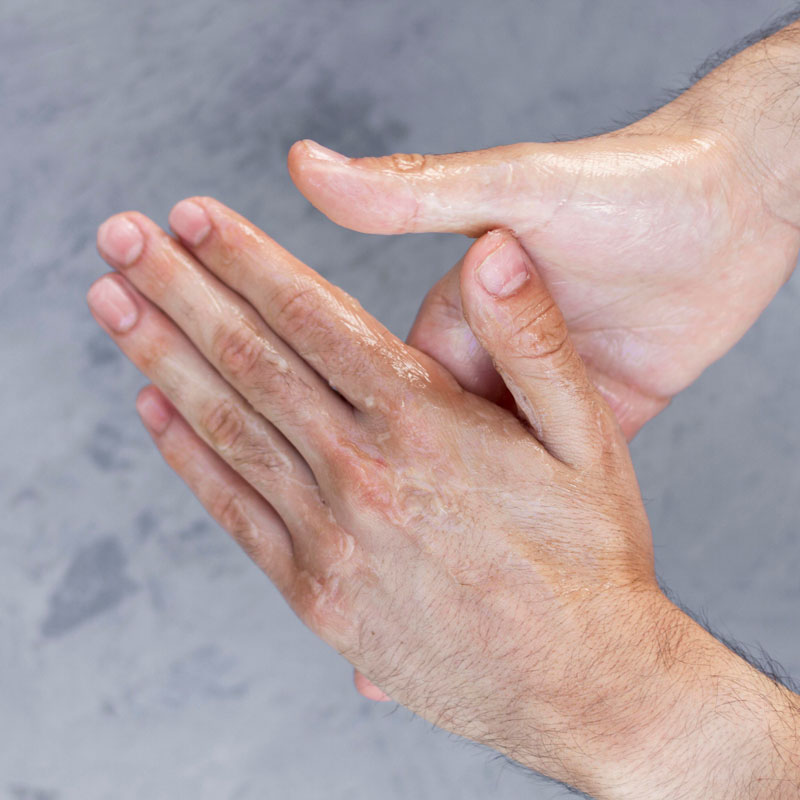
Do you feel embarrassed by sweat patches under your arms? Do your palms stay wet even in an air-conditioned room? If sweating feels out of control and happens even when you are not hot or exercising, you may have hyperhidrosis.
Hyperhidrosis is a medical condition that causes excessive sweating beyond what the body needs to cool itself. It is not just a cosmetic issue. It can affect your confidence, social life and daily routine. Many people silently struggle with it for years without knowing that safe and effective treatments are available.
At DermaStation, we offer advanced and personalized hyperhidrosis treatment in Delhi to help you feel comfortable and confident again.
What Is Hyperhidrosis?
Sweating is normal. It helps regulate body temperature. But in hyperhidrosis, sweat glands become overactive. Sweating may occur even in cool weather or while resting.
Common areas affected include:
- Underarms
- Palms
- Soles of the feet
- Face and forehead
There are two main types:
- Primary Hyperhidrosis: This is the most common type. It usually starts in childhood or teenage years. It affects specific areas like hands, feet or underarms. It is not caused by another illness and may run in families.
- Secondary Hyperhidrosis: This type is caused by an underlying medical condition such as thyroid disorders, diabetes, menopause or certain infections. It may also happen due to some medications. Sweating is usually more widespread.
A proper consultation with a dermatologist helps identify the type and choose the right treatment.
Hyperhidrosis Treatment Options That Dermatologists Recommend
There is no single treatment that works for everyone. The best option depends on:
- Severity of sweating
- Area affected
- Your medical history
- Your lifestyle and comfort level
At DermaStation, treatment plans are customized after detailed evaluation.
Below are the most effective options:
- Medical-Strength Antiperspirants
These are often the first line of treatment for mild to moderate sweating. They contain higher concentrations of aluminium chloride.
How they work:
- They temporarily block sweat ducts, reducing sweat release on the skin surface.
Best for:
- Underarm sweating
- Mild hand or foot sweating
They are usually applied at night for better results. Some people may experience mild irritation, which can be managed under medical guidance.
- Botulinum Toxin Injections (Botox)
This is one of the most popular and effective treatments for moderate to severe hyperhidrosis.
How it works:
- Botulinum toxin blocks the nerve signals that activate sweat glands. As a result, sweat production reduces significantly.
Best for:
- Underarms
- Soles
- Palms
- Forehead
Results usually last 4 – 6 months and repeat sessions can maintain relief. The procedure is quick and performed under expert supervision at DermaStation.
- Oral Medications
In some cases, doctors may prescribe oral medicines called anticholinergics. These reduce sweat production throughout the body by blocking certain nerve signals. They are used carefully because they can cause side effects like dry mouth or blurred vision. A dermatologist will assess whether this option is suitable for you.
This treatment is especially useful for sweaty hands and feet.
How it works:
- Hands or feet are placed in water trays while a mild electrical current passes through. This temporarily blocks sweat glands.
Sessions are done multiple times initially and later spaced out for maintenance. It is safe and effective when done consistently.
- Microwave-Based Therapy for Underarm Sweating
This is an advanced and long-lasting solution for axillary (underarm) hyperhidrosis. Microwave energy is used to destroy sweat glands permanently. Since sweat glands do not regenerate, results can be long-term.
Best for:
- Axillary hyperhidrosis
- Patients seeking a lasting solution
Most people need 1 – 2 sessions and results are long-lasting since sweat glands do not regenerate. Temporary swelling, redness or mild numbness may occur but usually resolves within a few days.
How Dermatologists at DermaStation Personalize Treatment
Every patient is different. During your consultation for hyperhidrosis treatment in Delhi, the dermatologist will:
- Ask about your sweating pattern and triggers
- Check the affected areas
- Review your medical history
- Rule out underlying causes if needed
Based on this, a customized plan is created. Sometimes, combining treatments gives better results.
What Happens During Your Hyperhidrosis Consultation
Your appointment will be simple and comfortable. You will have the chance to openly discuss your concerns.
The dermatologist may:
- Examine affected areas
- Suggest blood tests if secondary causes are suspected
- Explain all suitable treatment options
- Discuss expected results and maintenance
By the end of the consultation, you will have a clear treatment plan.
Simple Lifestyle Tips to Manage Sweating
While medical treatment is important, these tips can help:
- Wear loose cotton clothes
- Avoid spicy food and excess caffeine
- Carry extra clothing if needed
- Use absorbent pads for underarms
- Practice stress management techniques
These measures support treatment results but do not replace medical care.
Why Book an Appointment with Dr. Sumit Sethi at DermaStation?
Hyperhidrosis is treatable. You do not have to live with constant discomfort or embarrassment. With the right diagnosis and expert care, excessive sweating can be controlled effectively.
Dr. Sumit Sethi is a leading dermatologist at DermaStation with extensive experience and he carefully evaluates each case of hyperhidrosis before recommending treatment.
Book your consultation for hyperhidrosis treatment in Delhi at DermaStation today and feel confident in your own skin again.
References
- Grove GL, Togsverd-Bo K, Zachariae C, Haedersdal M.
Impact of microwave thermolysis energy levels on patient-reported outcomes for axillary hyperhidrosis and osmidrosis. Lasers in Surgery and Medicine. 2023;55(4).
Available at: https://onlinelibrary.wiley.com/doi/10.1002/lsm.23610
- Hsu TH, Chen YT, Tu YK, Li CN.
A systematic review of microwave-based therapy for axillary hyperhidrosis. Journal of Cosmetic and Laser Therapy. 2017;19(5):275–282.
Available at: https://pubmed.ncbi.nlm.nih.gov/28281850/
- Glaser DA, Coleman III, WP, Fan LK, Kaminer MS, Kilmer SL, Nossa R, Smith SR.
A randomized, blinded clinical evaluation of a novel microwave device for treating axillary hyperhidrosis: the Dermatologic Reduction in Underarm Perspiration Study. Dermatologic Surgery. 2012;38(2):185–191.
Available at: https://onlinelibrary.wiley.com/doi/abs/10.1111/j.1524-4725.2011.02250.x
- Lee SJ, Chang KY, Suh DH, Song KY, Ryu HJ.
The efficacy of a microwave device for treating axillary hyperhidrosis and osmidrosis in Asians: a preliminary study. Journal of Cosmetic and Laser Therapy. 2013;15(5):255–259.
Available at: https://pubmed.ncbi.nlm.nih.gov/23713761/
- Pissa M, Hashem R, Shayesteh A, Wrisley S, Micu E.
Evaluation of quality of life, anxiety, and depression in patients with primary axillary hyperhidrosis undergoing treatment with a microwave device: one-year follow-up. Acta Dermato-Venereologica. 2024;104:adv40543.
Available at: https://medicaljournalssweden.se/actadv/article/view/40543