
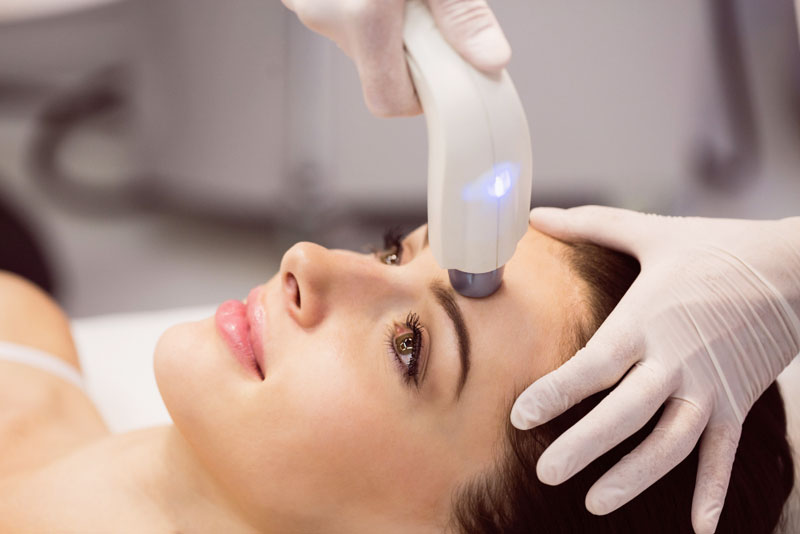
Certain developments in skin care have led to the creation of precise instruments that bring about specific results with minimal downtime. One of the best examples is the Q-Switch laser, successfully being the possible choice to eradicate pigmentation, tattoos, and other skin issues while maintaining safety and efficacy. It is a robust laser therapy with details about its benefits, procedure, aftercare, and frequently asked questions by patients.
What Is Q-Switch Laser Treatment?
This instrument releases focused, high-intensity pulses of light in very short bursts (nanoseconds), allowing the laser to break up unwanted pigment or ink particles without causing damage to the surrounding tissue. The laser energy penetrates deeply enough to target melanin or ink while preserving the superficial layers of the skin, thus rendering it a versatile and precise dermatological weapon.
Common Uses of Q-Switch Lasers
Dermatologists often indicate it for:-
- Tattoo Removal – Capable of the broadest range of colours of ink.
- Pigment Reduction – Used for treating persistent freckles, age spots, and melasma.
- Post-inflammatory hyperpigmentation -It assists in fading dark patches that occur after acne or injury.
- Specific Benign Pigmented Lesions – Such as café-au-lait spots or smaller birthmarks (depending on context).
Benefits of Q-Switch Treatment
- Precision and Safety: Due to the ultra-quick pulse, less heat disperses, protecting the surrounding skin.
- Ability to Treat Many Colors: From black and blue to green and red.
- Minimal Downtime: Patients can restart their routine activities.
- Very Versatile: Can safely treat many skin conditions over various parts of the body.
- Flexible Multi-Session Options: Treatment plan is responsive to changes in the patient’s condition.
- No General Anaesthesia: The procedure is commonly performed with topical numbing instead of other, more invasive methods of numbing.
What to Expect During the Procedure
- Consultation: Often includes skin type, location of concern, depth of concern, and setting treatment goals.
- Preparation: Cleansing skin and potentially clinical markings.
- Feeling Numb: Topical anaesthetic precludes pain with the pulses.
- Laser Application: Systematic brief bursts of laser energy are applied, usually taking several minutes.
- Thermal Sensation: Most patients report a bit of snapping sensation and warmth; tolerably pleasant.
- Multi-Session – Typically, treatment courses last several weeks and require multiple sessions.
Post-Treatment & Recovery
- Immediate Response: Redness and swelling are mild and usually resolve spontaneously. In some cases, light scabbing may occur on some areas.
- Skin Care: Gentle cleansing, moisturising, and good sun protection.
- Healing Process: Noticeable improvement is seen in most patients after 1–2 weeks.
- Multiple Sessions Required: This is especially true for tattoo removal or deep pigmentation.
- Downtime: Minimal – most people can return to life after 1–2 days.
Safety & Side Effects
Although Q-Switch lasers are highly precise in their application, side effects are possible.
- Temporary pigment changes: An increase or decrease in the treated area usually resolves without treatment.
- Crusting or blistering, though it seldom arises, can be treated via skin care and using proper laser technique.
- Mild discomfort: Comparable to a mild sunburn after treatment.
- Rarely occurring: The risk of scarring or infection remains extremely low when under expert care.
Who’s a Good Candidate?
Q-Switch laser treatment can address multiple skin problems, nevertheless best candidates are those with:-
- Localised issues with pigmentation
- Tattoos targeted for removal (depending on ink colour and depth)
- Skin types I-IV (For those with darker skin types, laser treatment may require customisation or settings)
- No active infection or open wounds in the treatment area
- Realistic expectations and commitment to follow through with any follow-up sessions
Frequently Asked Questions (FAQs) by Patients
How many sessions will I need?
It depends on the concern. Four to eight sessions for tattoo removal, depending on the type and depth of ink. For pigment correction, results are usually achieved in two to four sessions.
Are the results permanent?
Yes – the body physically breaks down and washes away tattoo ink, and pigmentation can be substantially weakened in quantity. Just following skin care and sun protection will help preserve the results.
Is it painful?
Most patients say that it feels like getting a small rubber band snapped against the skin or a mild warmth. While tolerable, a topical anaesthetic during treatment further alleviates the discomfort.
Can all tattoo colours be treated?
Most tattoo colours can be treated: black, blue, green, and red—but lighter pastel shades may take longer. Yellow and white inks are often more resistant and may require advanced techniques for effective treatment.
Will my skin change tone after treatment?
Temporary lightening or darkening is rare and usually resolves independently within a few weeks. Protective sun care helps to minimise this risk.
Can Q-Switch cure or treat melasma?
It can assist in treating superficial hyperpigmentation, but deep melasma will likely require complementary therapies, including topical depigmenters and/or chemical peels, for the best results.
Is it 100% safe and favourable for all skin tones?
Yes, if the settings are adjusted well. Darker skin tones may warrant meticulous calibration to curb pigmentation shifts.
Can makeup be applied?
Yes, after the initial redness has ceased; gently remove any makeup each day, use a mild cleanser, and apply sun block and reapply the makeup.
What key post-care is required?
Be gentle and clean the area that has been treated. Keep it well moisturized, prevent picking off the scabs, and wear sun block everyday from that moment on.
Conclusion
The Q-Switch laser works with surgical precision to treat skin problems with minimal involvement, avoiding any collateral damage. It gives redness for a very short period, but it has minimal impact on the patient’s daily routine. It will cure the skin condition with the help of a good dermatologist.
Making it a prime offering in our aesthetic dermatology portfolio, the advanced Q Switch Laser Treatment in Delhi at our clinic helps remove the unwanted tattoo effectively and treat skin conditions like pigmentation and even hyperpigmentation. As a precision-based treatment, Q-Switch Laser is the most sought-after for delivering exceptional results while ensuring complete safety and accuracy.