Abstract
Background:
Alopecia areata is a common autoimmune hair‑loss disorder, but alopecia totalis in children can be particularly refractory to conventional topical therapy. Janus kinase (JAK) inhibitors such as tofacitinib have shown promising results in adults, but pediatric data remain limited.
Case presentation:
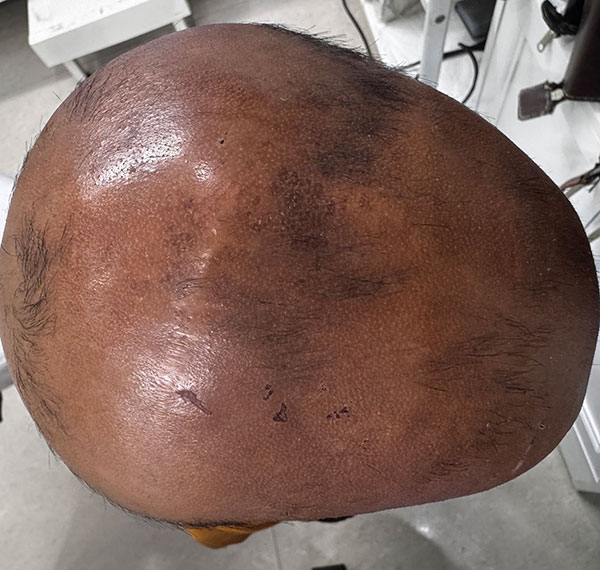
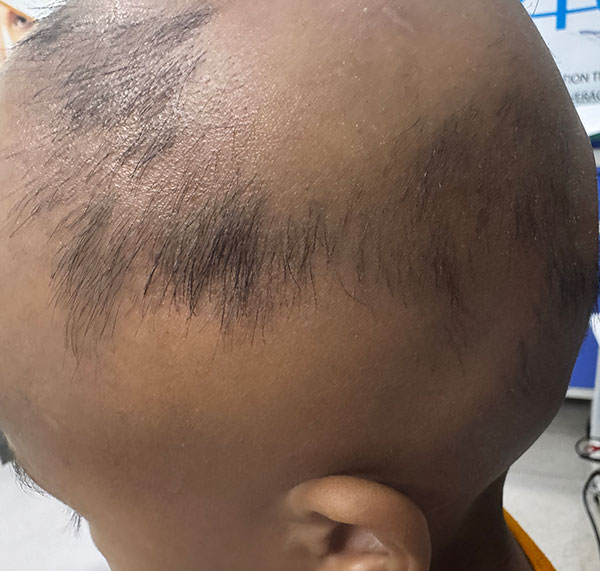
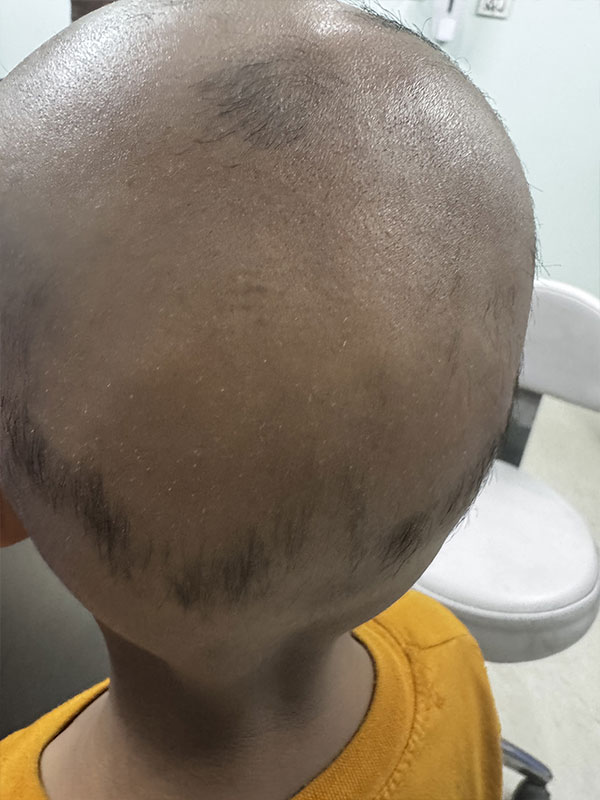
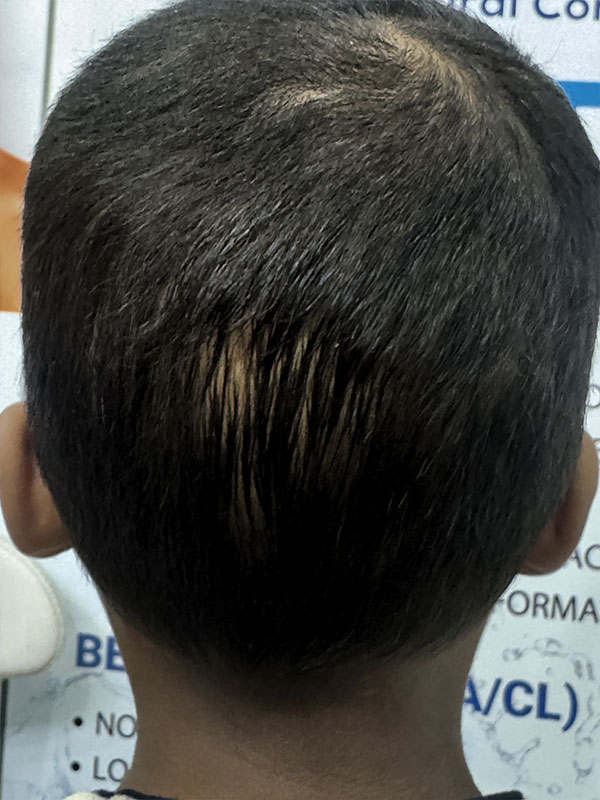
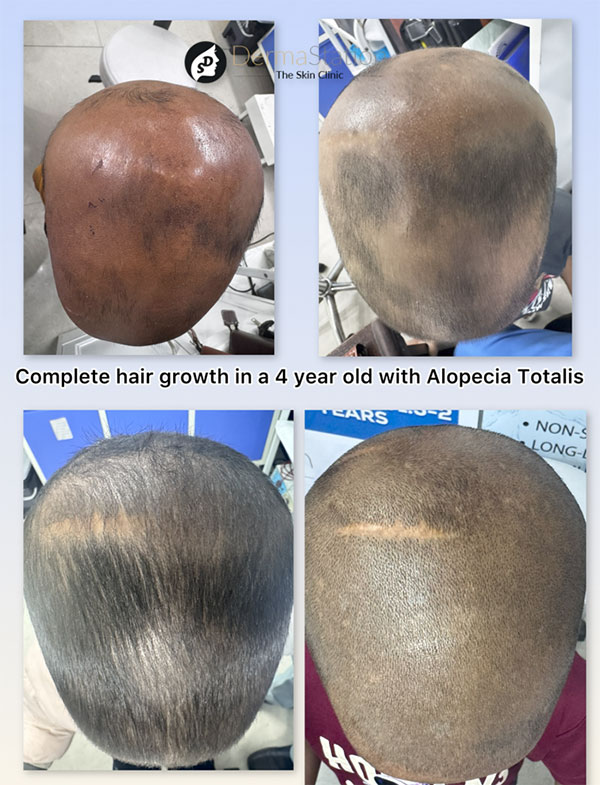
We report a 4‑year‑old boy who presented with a 3‑year history of progressive alopecia areata since the age of 1 year. He had no systemic complaints and extensive investigations, including CBC, LFT, KFT, lipid profile, 25‑OH vitamin D, thyroid profile, urine routine microscopy, HBsAg, anti‑HCV, and IGRA, were within normal limits. He had been on topical minoxidil 5% and betamethasone cream for 1 year at a government hospital with only minimal improvement. On examination, he had more than 90% hair loss involving the scalp, consistent with alopecia totalis. After exclusion of contraindications, oral tofacitinib solution 3.2 mL twice daily was started along with topical minoxidil 2% (1 mL applied at bedtime). He was followed up every 4 weeks initially and then every 8 weeks with routine blood investigations. After 1 year of treatment, 100% hair regrowth on the scalp was observed, with no significant systemic side effects.
Conclusion:
This case illustrates that oral tofacitinib, combined with topical minoxidil, may be effective and well‑tolerated in a young child with refractory alopecia totalis.
Introduction
Alopecia areata is a non‑scarring, autoimmune hair‑loss disorder that commonly affects children and adults. When more than 90% of scalp hair is lost, the condition is classified as alopecia totalis, which often has a chronic and treatment‑resistant course. First‑line therapies typically include topical or intralesional corticosteroids and topical minoxidil, but these may provide only partial or transient improvement.
JAK inhibitors such as tofacitinib have emerged as promising agents for severe alopecia areata in adults, with several case series and small trials reporting substantial hair regrowth. However, data on their use in young children are sparse, and long‑term safety remains a concern. We report a 4‑year‑old boy with alopecia totalis who achieved complete hair regrowth after 12 months of oral tofacitinib therapy without significant adverse effects.
Case presentation
Patient information
A 4‑year‑old boy presented with a history of progressive patchy hair loss starting at the age of 1 year. There were no associated systemic complaints such as fever, weight loss, fatigue, gastrointestinal symptoms, or skin lesions elsewhere. He was fully vaccinated according to age and had no history of recent infections or major trauma. Development milestones were normal according to.
History of present illness
The parents reported that hair loss began as small patches on the scalp, which gradually coalesced and progressed to near‑complete loss of scalp hair over the next 2 years. The child had been previously treated at a government hospital with topical minoxidil 5% and betamethasone cream for approximately 1 year, with only minimal improvement. No systemic steroids or other immunomodulatory agents had been used previously.
Past medical history
No history of autoimmune disease, thyroid disorder, or other chronic illnesses.
General examination
- Age: 4 years.
- Sex: Male.
- Body weight: 15 kg.
- General condition: Well‑nourished, no lymphadenopathy.
- Vital signs: Within normal limits for age.
Dermatological examination
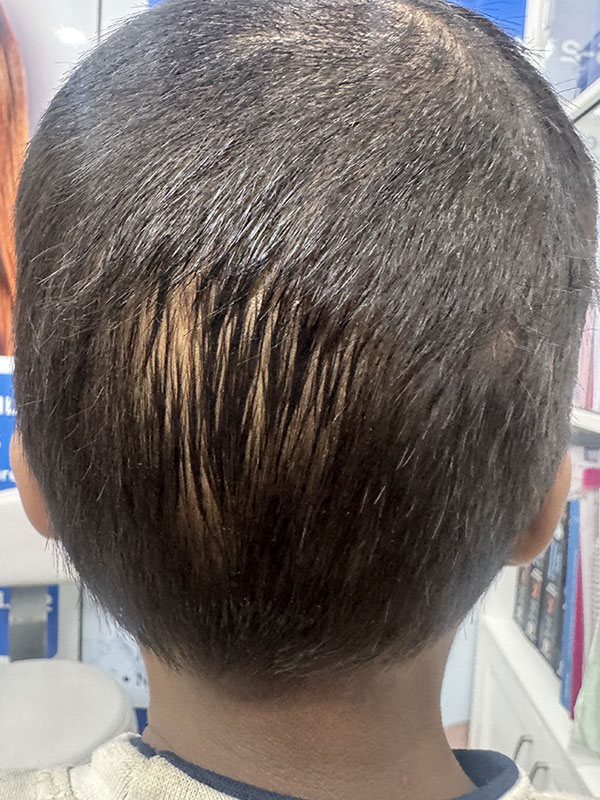
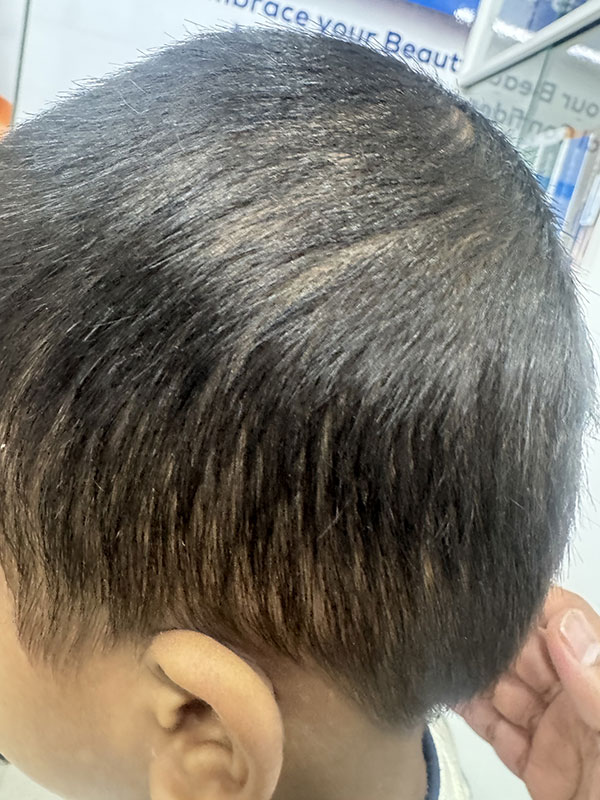
On examination of the scalp, there was diffuse, non‑scarring hair loss affecting more than 90% of the scalp surface. Remaining hair was sparse and fine, with no evidence of scaling, pustules, or exudation. Nail examination was normal. There was no involvement of eyebrows, eyelashes, or body hair at presentation. The clinical picture was consistent with alopecia totalis.
Laboratory investigations
To rule out underlying systemic disease and to assess baseline safety, the following investigations were performed:
- CBC: Within normal limits.
- Liver function tests (LFT): Normal.
- Kidney function tests (KFT): Normal.
- Lipid profile: Within normal limits.
- 25‑OH vitamin D: Within normal range.
- Thyroid profile (TSH, T3, T4): Normal.
- Urine routine microscopy: Normal.
- HBsAg: Negative.
- Anti‑HCV: Negative.
- IGRA (for tuberculosis): Negative.
No autoimmune markers or other significant abnormalities were detected.
Diagnosis
Based on the clinical presentation, progression, and absence of systemic disease, the diagnosis was alopecia totalis (a severe form of alopecia areata).
Management
Given the extent of hair loss and suboptimal response to topical therapy, oral tofacitinib was considered after discussion with the family.
- Drug: Oral tofacitinib solution 1 mg/ml.
- Dose:2 mL twice daily.
- Adjuvant therapy: Topical minoxidil 2% solution, 1 mL applied to the scalp at bedtime.
The child was advised routine follow‑up every 4 weeks initially, with clinical assessment and relevant blood tests (CBC, LFT, KFT) monitored every 4–8 weeks thereafter.
Follow‑up and outcome
- At 1‑month follow‑up: Early vellus‑type hair regrowth was noted, but overall coverage remained minimal.
- At 3‑month follow‑up: Increasing terminal hair regrowth over the scalp, with visible improvement in density.
- At 6‑month follow‑up: More than 90% hair regrowth on the scalp was observed. The hair was cosmetically acceptable, with diffuse but not fully normal‑looking density.
- No systemic side effects such as infection, fever, gastrointestinal upset, or significant laboratory abnormalities were reported during treatment.
The family reported high satisfaction with the cosmetic outcome and expressed willingness to continue therapy under close monitoring.
Discussion
Alopecia areata affects 1–2% of the population, with pediatric onset accounting for up to 20% of cases. When the disease progresses to alopecia totalis, spontaneous remission is uncommon and long‑term psychosocial impact can be significant, especially in children. Standard therapies, including topical steroids and minoxidil, often fail to induce complete regrowth in such severe forms.
Several case series and small open‑label trials in adults have demonstrated that JAK inhibitors such as tofacitinib and baricitinib can induce robust hair regrowth in moderate‑to‑severe alopecia areata. However, published data in children under 5 years are limited, and concerns about long‑term immune and growth effects remain important.
In our case, a 4‑year‑old boy with long‑standing alopecia totalis achieved more than 100% hair regrowth after 12 months of oral tofacitinib, with no significant systemic adverse effects. The combination with topical minoxidil may have contributed to the rapid response, although the primary driver was likely the immunomodulatory effect of tofacitinib on the autoimmune attack on hair follicles.
Conclusion
This case demonstrates that oral tofacitinib, combined with topical minoxidil, can induce rapid and substantial hair regrowth in a young child with alopecia totalis during 12 months of treatment.