
Medically reviewed by Dr. Sumit Sethi, MBBS, MD (Dermatology, Venereology & Leprosy), DNB (Dermatology & Venereology), Consultant Dermatologist, DermaStation, Janakpuri, New Delhi. Last updated: 20 November 2026.
Microneedling and MNRF (microneedling radiofrequency) both use fine needles to trigger your skin’s natural healing and collagen production. The difference is that MNRF adds radiofrequency energy through the needles, which heats the deeper layers of the skin. This makes MNRF more effective for deeper acne scars, open pores and mild skin laxity. Plain microneedling is gentler and suits milder concerns.
This guide compares the two side by side: how they work, results, sessions, downtime and how a dermatologist decides which one you need.
At a glance
- Microneedling creates tiny channels in the skin to stimulate collagen. It is best for mild scars, dull skin and fine texture problems.
- MNRF adds controlled heat through the needles, giving stronger collagen remodelling and some tightening.
- MNRF usually needs fewer sessions for moderate to deep acne scars.
- Both are suitable for Indian skin when done with the right settings and aftercare.
- Downtime is short for both: a few days of redness and mild swelling.
What is microneedling?
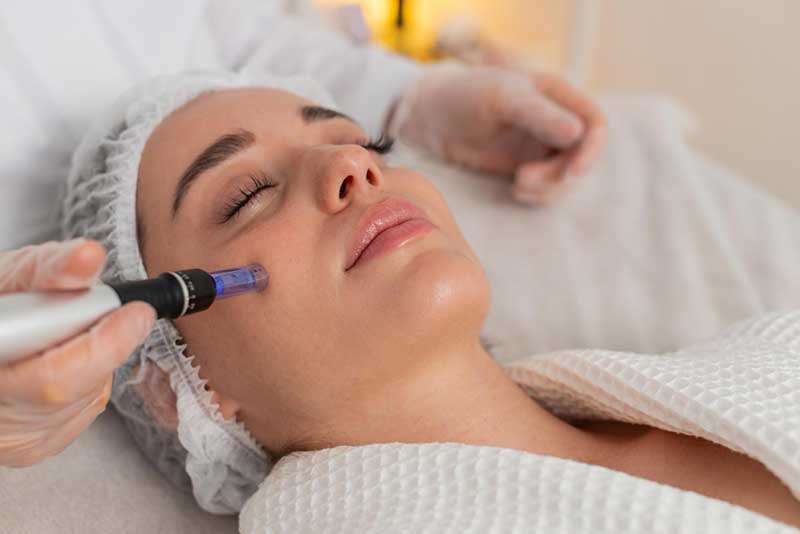
Microneedling (also called collagen induction therapy) uses a device with very fine, sterile needles to create controlled micro-injuries in the skin. The skin responds by producing new collagen and elastin over the following weeks, which improves texture, fine lines and mild scars. Read more in our guide on how microneedling works, benefits and side effects.
What is MNRF?
MNRF combines microneedling with radiofrequency energy. Insulated needles go to a set depth and release heat inside the skin. This heat tightens existing collagen and triggers new collagen deep in the skin, while largely sparing the surface. Research reviews describe it as an effective option for acne scars, and note it carries a lower risk of dark marks in darker skin types because most of the energy is delivered below the surface. Learn more in our RF microneedling guide.
Microneedling vs MNRF: side-by-side
| Feature | Microneedling | MNRF |
|---|---|---|
| How it works | Fine needles create micro-channels | Fine needles plus radiofrequency heat deep in the skin |
| Strength | Gentle to moderate | Moderate to strong |
| Best for | Mild scars, dull skin, fine lines, uneven texture | Moderate to deep acne scars, open pores, mild sagging, stretch marks |
| Usual sessions | 4 to 6, about 4 weeks apart | 3 to 5, about 4 to 6 weeks apart |
| Downtime | 1 to 3 days of redness | 2 to 5 days of redness and mild swelling |
| Comfort | Numbing cream used; mild discomfort | Numbing cream used; slightly more discomfort |
| Indian skin | Suitable | Suitable; heat is delivered below the surface |
Which one is right for you?
| Your concern | Option a dermatologist may suggest |
|---|---|
| Dull skin, fine texture, mild marks | Microneedling |
| Mild, shallow acne scars | Microneedling or MNRF |
| Moderate to deep acne scars | MNRF, often combined with other scar treatments. See types of acne scars and treatment |
| Large open pores | MNRF. Read about treatment of large open pores |
| Mild sagging or loss of firmness | MNRF |
| Stretch marks | MNRF or microneedling, depending on age and depth. See stretch mark treatment with MNRF |
| Active pimples | Neither until acne is controlled |
Many patients start with MNRF for stubborn scars and continue with microneedling for maintenance. Your dermatologist will plan the best order for your skin.
What results to expect and when
Collagen builds slowly, so results appear gradually:
- After 1 to 2 weeks: skin looks fresher and smoother.
- After 2 to 3 sessions: visible improvement in texture and scar depth.
- 3 to 6 months after the last session: results continue to improve as collagen matures.
For a month-by-month view, see our microneedling treatment timeline.
Recovery and aftercare
- Expect redness, mild swelling and a sunburn-like feeling for 1 to 5 days.
- Use only the gentle cleanser and moisturiser your doctor recommends for the first few days.
- Avoid makeup for 24 hours, and avoid sun exposure, swimming, saunas and heavy workouts for a few days.
- Use sunscreen strictly, which is especially important for Indian skin.
- Do not pick or scrub any flaking skin.
Our microneedling aftercare guide covers this in detail.
Who should wait: people with active acne, skin infection, cold sores in the area, a tendency to form raised scars, or who are pregnant. Tell your doctor about any regular medicines and recent treatments.
What affects the cost of microneedling and MNRF in Delhi?
- Type of treatment: MNRF uses more advanced equipment, so it usually costs more per session than plain microneedling.
- Treatment area: face only, or face with neck or body areas.
- Number of sessions needed for your skin concern.
- Combination treatments added to your plan.
The exact cost is shared after a skin assessment. Visit our microneedling treatment in Delhi page for more details.
Frequently asked questions
MNRF is stronger and usually better for deeper scars, open pores and tightening. Microneedling is gentler and suits milder concerns. “Better” depends on your skin.
Yes, when done with the right settings. Because heat is delivered below the surface, the risk of dark marks is lower than with some lasers.
Most patients need 3 to 5 sessions, about 4 to 6 weeks apart, depending on scar depth.
A numbing cream is applied first, so most people feel only mild discomfort.
Many people return the next day. Some prefer a day or two off because of redness.
It can soften scars significantly, especially mild ones. Deeper scars usually respond better to MNRF or combined treatments.
Conclusion
Microneedling and MNRF both stimulate collagen, but MNRF goes deeper and works harder on scars, pores and laxity. Microneedling is a gentle option for mild concerns and maintenance. A dermatologist can examine your skin and recommend the right one, or a combination.
Not sure which one you need? Book a consultation with Dr. Sumit Sethi at DermaStation, Janakpuri. Explore our MNRF treatment in Delhi page.
This article is for general information only and does not replace a medical consultation. Results vary from person to person.
Medical review and sources
Medically reviewed by Dr. Sumit Sethi, MBBS, MD (Dermatology, Venereology & Leprosy), DNB (Dermatology & Venereology), Consultant Dermatologist, DermaStation.
- Niaz G, et al. Fractional radiofrequency microneedling as a monotherapy in acne scar management: a systematic review. Clin Cosmet Investig Dermatol, 2025.
- Radiofrequency and radiofrequency microneedling in skin of color: a review of usage, safety and efficacy. Dermatol Surg, 2023.
- Juhasz MLW, Cohen JL. Microneedling for the treatment of scars: an update for clinicians. Clin Cosmet Investig Dermatol, 2020.
- Fractional CO2 laser versus fractional microneedling radiofrequency in acne scars. J Cutan Aesthet Surg, 2021.